
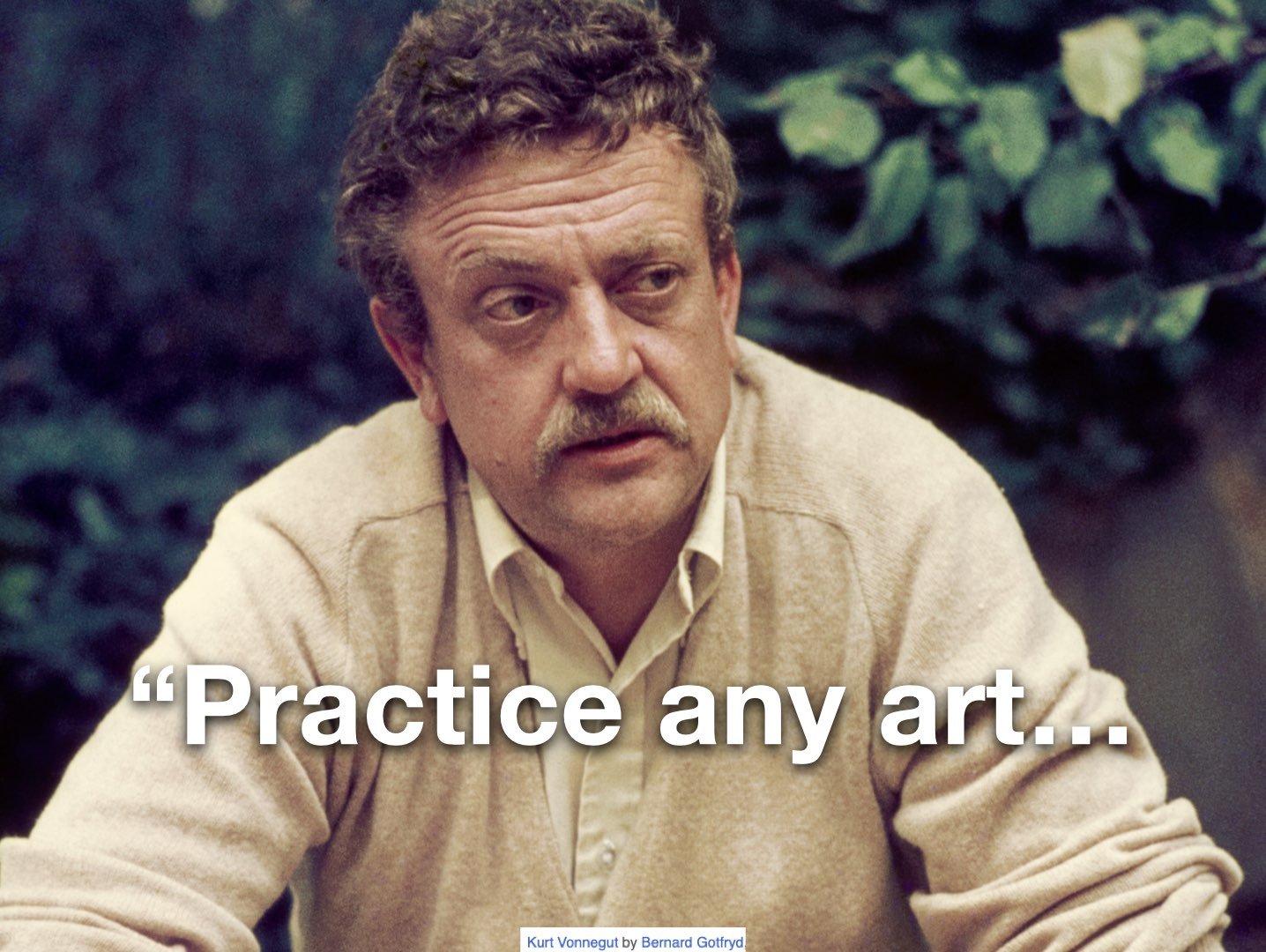
Kurt Vonnegut on Why Art Matters for Everyone
Kurt Vonnegut (1922–2007) was one of the truly great American writers of our time. In 2006, when Vonnegut was 84, a few students at Xavier High School in New York sent letters to the the legendary author asking him to visit their class. The fact that Vonnegut actually replied shows what a thoughtful and kind man he was. Vonnegut politely declined the invitation with humor and with grace: "I don't make public appearances any more because I now resemble nothing so much as an iguana," wrote Vonnegut. However, his letter offered beautiful wisdom and advice for these young students.

Shokunin Kishitsu and The 5 Elements of Mastery
Shokunin kishitsu (職人気質) translates roughly as the “craftsman spirit." The documentary, in spite of its title, is not about sushi, it's about how to be a master shokunin, how to become truly great as a master craftsman. Yes, if you like sushi—and beautiful cinematography of sushi—then you'll not be disappointed. But even if you have zero interest in sushi, you will be motivated and inspired by this film; it's a wonderful documentary. No matter your job or your dreams, there are valuable lessons in this gem of a film that will help you in your own pursuit of mastery. In this post, I highlight some of the key takeaways.
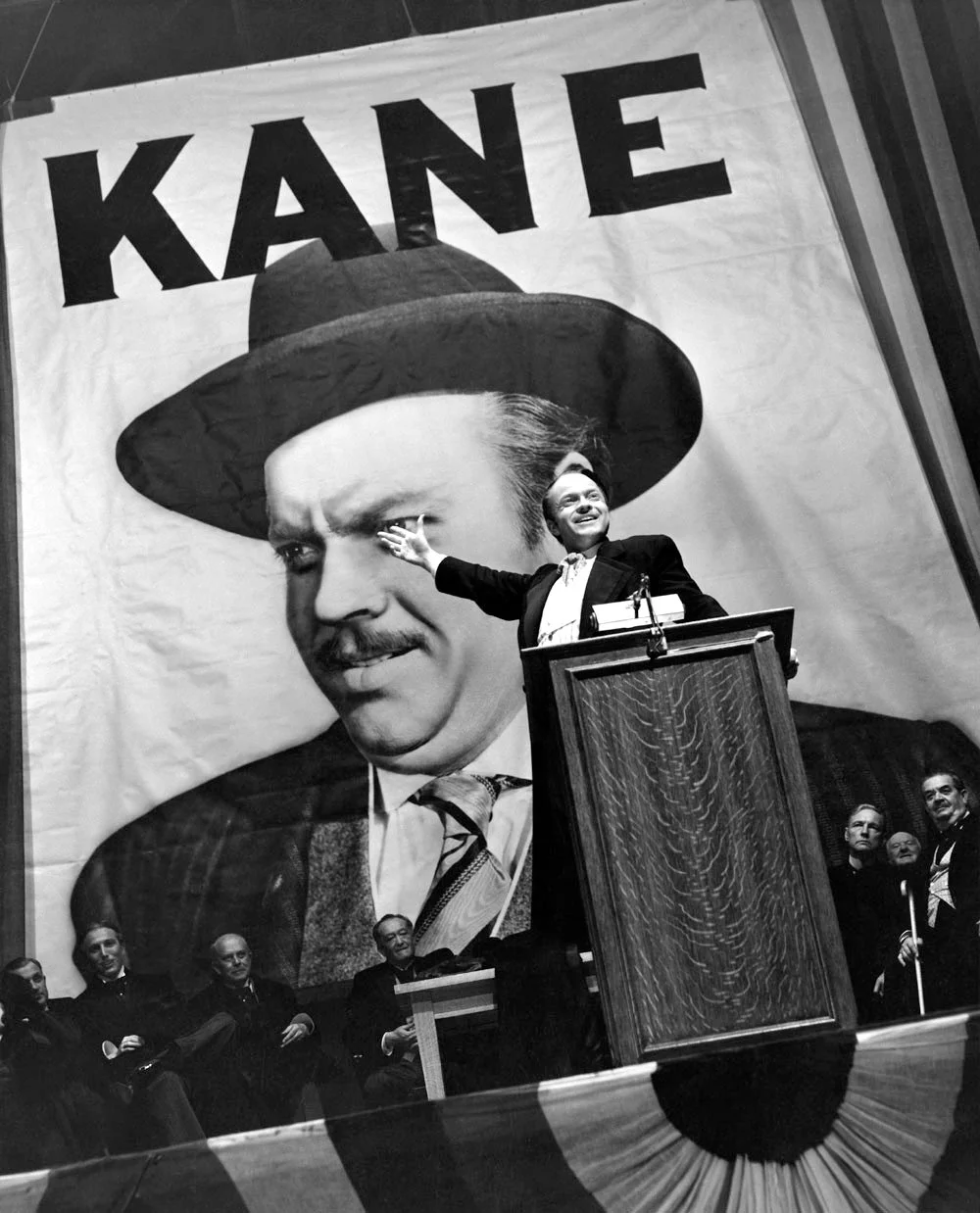
Presentation Lessons from Citizen Kane
Citizen Kane (1941) is a wonderful film that is fresh even today, but are there lessons in the making of the film that we can apply more broadly to other creative arts including presentations? I believe there are. The film was innovative and used techniques in storytelling and production that were not common for the time. There are many things that made the film remarkable, such as the good use of makeup to age the actors, the physicality which Welles brought to the screen, the natural feel of the dialog achieved by allowing actors to cross-talk, the smooth transitions and continuity achieved via J-cuts, unusual camera angles, long scenes without a cut, use of subjective camera, and on and on—but here are a few below from which we can extrapolate lessons for our own presentations or speeches in all their myriad forms.
Personal Kaizen: 15 Tips for Your Continuous Improvement
There is an old saying that goes “Once you think you have arrived, you have already started your descent.” One must never think they "have arrived." You may have heard the refrain "If it ain't broke, don't fix it." This is not bad advice necessarily. However, the spirit of kaizen suggests that there is always something to learn and ways to improve, and that it is also better to prevent problems than to fix them. So, no matter how good things may seem now, there is always room for improvement, and looking to improve every day is what personal kaizen is all about. It’s not about how far you have come or how far you have yet to go, it is only about this moment and being open to seeing the lessons around you, and possessing the capacity and willingness to learn and improve.

Cut the Non-Essential
Presentation and storytelling lessons from the great filmmaker Akira Kurosawa. The lessons include: Visual simplicity, use of negative space, building complexity gradually, storytelling over technical flash, use of silence, speaking with authenticity, “show don’t tell” and many more. While Kurosawa was technically brilliant, his films succeeded because they told compelling stories. His technical mastery served the narrative, not the other way around. In presentations, this means your content and narrative matter more than fancy software effects. Your message is the foundation; your technical skill and design should support it.

AI is a Useful Assistant, but it Won’t Make Your Presentation for You.
True learning and quality content require time, deep thinking, and effort. Presentations should be a tool for learning and reflection, not just for quick communication of ideas. I propose a digital-analog-digital approach for preparation, which integrates initial AI-assisted research with dedicated time for off-line analog thinking, reading, reflection, organization, and finally digital design.

The Signal-to-Noise Ratio: Activity
A common refrain is “less is more.” And while this is not always true, usually when we remove elements that we realize are not actually essential, the design will become clearer or have more impact. Reducing noise in slides or posters means carefully curating content, using visuals to illustrate or amplify ideas rather than repeat them, and designing layouts that enhance—rather than overwhelm—your own storytelling. The audience’s journey through your presentation should feel natural and focused on the information and the facts as well as your own insights and perspectives. The visuals, if done poorly with a lot of noise, can actually work against you.

Be Like the Bamboo: 7 Lessons from the Japanese Forest
The forests that surround our village here in Nara, Japan are filled with beautiful bamboo goves. In Japan, the symbolism of the bamboo plant runs deep and wide and offers practical lessons for life and for work. I summarized the lessons below with presentation and learning in mind, but as you read these lessons from bamboo, you may think of other practical implications for your own life and work.

7 Japanese Aesthetic Principles to Change Your Thinking
The principles of Zen aesthetics found in the art of the traditional Japanese garden, for example, have many lessons for us, though they are unknown to most people. The principles are interconnected and overlap; it's not possible to simply put the ideas in separate boxes. Thankfully, Patrick Lennox Tierney has a few short essays elaborating on the concepts. Below are just seven design-related principles (there are more) that govern the aesthetics of the Japanese garden and other art forms in Japan. Perhaps they will stimulate your creativity or get you thinking in a new way about your own design-related challenges.

What is Good Presentation Design?
When it comes to designing presentations visuals over the years, many of us have learned practices and habits that may require some unlearning. The best visuals are ones designed with an eye toward simplicity. Yet, this says nothing about the specifics of a visual presentation. That will depend on the content and context. In this post, I ask the question “what is good presentation design anyway?”