Shokunin Kishitsu and The 5 Elements of Mastery
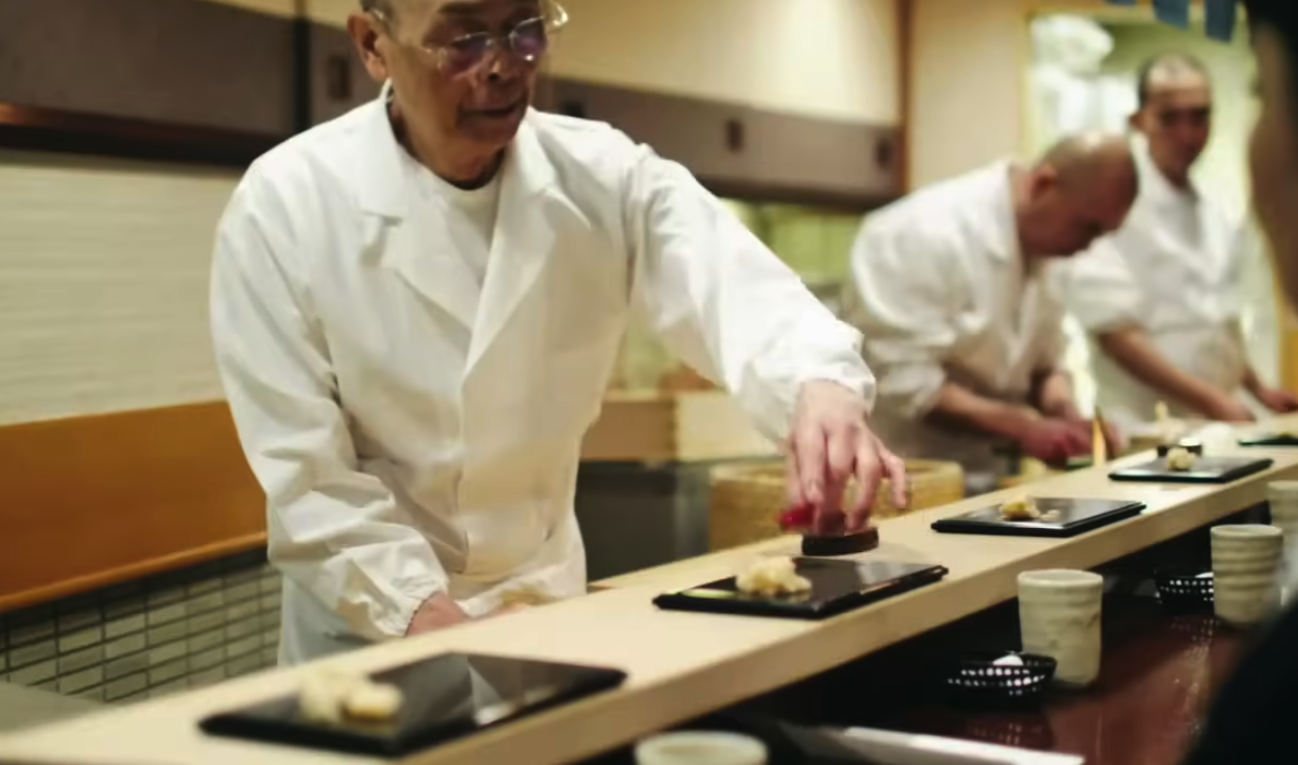
From Jiro Dreams of Sushi
A few years ago, I dined in Tokyo with a friend who was here on business from California. My friend’s the CEO of a large tech company with offices worldwide, including here in Japan. He's a powerful leader, a successful business person, and a nice guy to boot. So when he said that he was absolutely shocked that I had not seen the film Jiro Dreams of Sushi, I felt ashamed of my failing and placed an order for the DVD immediately on Amazon (on Netflix these days). "I can't believe you have not seen this movie!" he said. "I must have seen it 5-6 times by now and there's always something to learn." I’ve seen the movie about a dozen times since then and recommend it to my design and marketing students every year at the university. My friend was right, there are many valuable lessons in this documentary. I can suggest the movie to anyone who is interested in a beautiful visual narrative that is a mix of innovation insights and inspiration.
Shokunin Kishitsu
Shokunin kishitsu (職人気質) translates roughly as the “craftsman spirit." The documentary, in spite of its title, is not about sushi, it's about how to be a master shokunin, how to become truly great as a master craftsman. Yes, if you like sushi—and beautiful cinematography of sushi—then you'll not be disappointed. But even if you have zero interest in sushi, you will be motivated and inspired by this film. The film is not perfect, of course. For example, the narrative could use a bit more objectivity and a more critical eye; there are surely more downsides to Jiro's approach. Yet, on the whole, it's a wonderful documentary. No matter your job or your dreams, there are valuable lessons in this gem of a film that will help you in your own pursuit of mastery. Checkout the trailer below for the feel of the film.
Five elements of Mastery
There are many lessons from the film, but I will focus here on five main points that the film makes early on. Food critic Masuhiro Yamamoto speaks of what makes Jiro a true master at his art. "He sets the standard for self-discipline," Yamamoto says. "He is always looking ahead. He's never satisfied with his work. He's always trying to find ways to make the sushi better, or to improve his skills. Even now, that's what he thinks about all day, every day."
What do any of these points below have to do with presentation? Well, public speaking, including presentation given with the aid of multimedia, is an art. It may be a big aspect of your life and career, or it may play a very minor role. But the art of presentation, and the art of communication in general, is something worthy of an obsessive pursuit of excellence. No matter how good you are today, you can get better. And in a world with increasing amounts of distraction and ubiquitous generative AI—some of it good, much of it slop—clarity, authenticity, and your own unique ability to connect with others will become more important than ever before.
Below are the five attributes, according to Yamamoto, that are found in any great chef. Think about how you—or your team—can apply these to your own work (art).
1. Majime (真面目). A true master is serious about the art. He or she strives for the highest level possible always. The commitment to hard work is strong. The level of dedication is constant. As Jiro's older son says in the film, "We're not trying to be exclusive or elite. The techniques we use are no big secret. It's just about making an effort and repeating the same thing every day." Their approach may be simple but their dedication and execution is what sets them apart.
2. Kojoshin (向上心). Always aspire to improve oneself and one's work. There is an old Zen adage that says once you think you have arrived, you have already begun your descent. One must never think they "have arrived." One of the shokunin at the fish market touches on this theme in the film while searching for the perfect fish. "...Just when you think you know it all, you realize that you're just fooling yourself," he says. One must always try to improve. "I do the same thing over and over, improving bit by bit, says Jiro. "There is always a yearning to achieve more."
3. Seiketsukan (清潔感). Cleanliness, freshness. "If the restaurant doesn't feel clean, the food isn't going to taste good," Yamamoto says. One can not prepare and perform well if the environment is cluttered, messy, or dirty. Some people say that a disorganized work space is liberating. I’m not in that camp. For me at least, a dirty, cluttered office decreases my creativity and increases my anxiety. I am not a neat freak by any means, but when my office is cluttered, my mind is cluttered too (and often vice versa). This article touches on this issue outside the kitchen (3 Steps to a Permanently Clear Desk.)
4. Ganko (頑固). Stubbornness, obstinacy. The fourth attribute is...Impatience, Yamamoto says. "They are better leaders than collaborators. They're stubborn and insist on having it their way." Jiro is an individualist in pursuit of excellence rather than a team player in search of consensus. This does not mean he does not rely on his team or listen to them, but his team is hand picked and trained by him. In the end it is his vision and his responsibility. You can apply Ganko in a sense to your own expectations for yourself as well. That is, you can be “stubborn” with yourself as a way to push yourself and keep moving forward. I know it's also important to be kind to yourself and not beat yourself up over mistakes or slow progress. This absolutely true. And yet it’s also important to remain stubborn and stick to your expectations for yourself (and others when appropriate) and accept responsibility for your own high standards and progress. No one can do it for you; it’s all up to you.
5. Jyonetsu (情熱). Passion, enthusiasm. From the very first moments of the film: "Once you decide on your occupation...you must immerse yourself in your work. You have to fall in love with your work. Never complain about your job. You must dedicate your life to mastering your skill. That's the secret of success...and is the key to being regarded honorably." No passion, no art.
Your work, your art
The spirit of the shokunin is the pursuit of perfection. The pursuit is hard and the journey long, never ending in fact. But you love what you do in spite of the hardships. The work is not at all about the money. "Shokunin try to get the highest quality fish and apply their technique to it," Jiro's oldest son says. "We don't care about money. All I want to do is make better sushi."
Remember that the shokunin lessons here are not only for chefs or artists such as painters, musicians, dancers, etc. In the book Linchpin: Are You Indispensable? famed business guru Seth Godin makes the case that many dedicated professionals are doing art: “Art isn't only a painting. Art is anything that's creative, passionate, and personal. And great art resonates with the viewer, not only with the creator." An artist, says Godin, "is someone who uses bravery, insight, creativity, and boldness to challenge the status quo. And an artists takes it personally." You must throw yourself into it, says, Godin:
"Art is a personal act of courage, something one human does that creates change in another.” — Seth Godin
The final few lines from the film Jiro Dreams of Sushi sum up the lessons from the master shokunin.
Always...
look ahead and above yourself.
Always try...
to improve on yourself.
Always strive…
to elevate your craft.