

The Signal-to-Noise Ratio: Activity
A common refrain is “less is more.” And while this is not always true, usually when we remove elements that we realize are not actually essential, the design will become clearer or have more impact. Reducing noise in slides or posters means carefully curating content, using visuals to illustrate or amplify ideas rather than repeat them, and designing layouts that enhance—rather than overwhelm—your own storytelling. The audience’s journey through your presentation should feel natural and focused on the information and the facts as well as your own insights and perspectives. The visuals, if done poorly with a lot of noise, can actually work against you.

Be Like the Bamboo: 7 Lessons from the Japanese Forest
The forests that surround our village here in Nara, Japan are filled with beautiful bamboo goves. In Japan, the symbolism of the bamboo plant runs deep and wide and offers practical lessons for life and for work. I summarized the lessons below with presentation and learning in mind, but as you read these lessons from bamboo, you may think of other practical implications for your own life and work.

7 Japanese Aesthetic Principles to Change Your Thinking
The principles of Zen aesthetics found in the art of the traditional Japanese garden, for example, have many lessons for us, though they are unknown to most people. The principles are interconnected and overlap; it's not possible to simply put the ideas in separate boxes. Thankfully, Patrick Lennox Tierney has a few short essays elaborating on the concepts. Below are just seven design-related principles (there are more) that govern the aesthetics of the Japanese garden and other art forms in Japan. Perhaps they will stimulate your creativity or get you thinking in a new way about your own design-related challenges.

What is Good Presentation Design?
When it comes to designing presentations visuals over the years, many of us have learned practices and habits that may require some unlearning. The best visuals are ones designed with an eye toward simplicity. Yet, this says nothing about the specifics of a visual presentation. That will depend on the content and context. In this post, I ask the question “what is good presentation design anyway?”
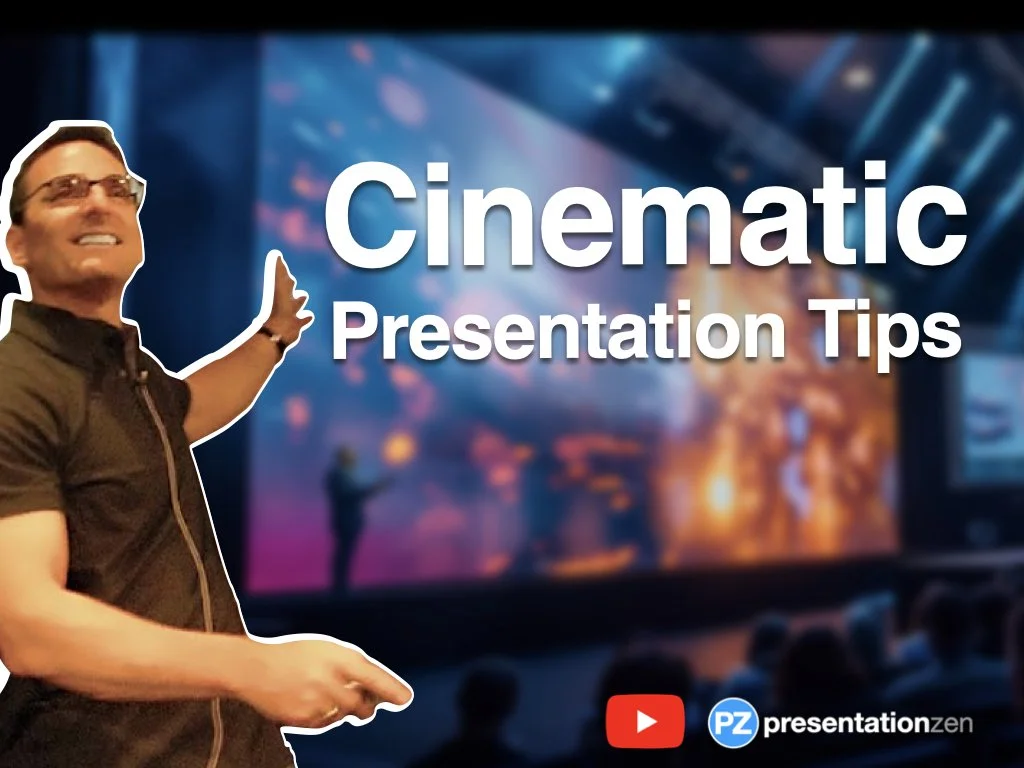
Tips for Creating Dynamic Cinematic Presentations
In this tutorial, I'll guide you through the process of employing the Magic Move tool in Keynote using the “Ken Burns effect” to add a touch of cinematic interest to your slides. This art of dynamic zooming will transform static slides into engaging visuals. Learn also how to seamlessly integrate text behind elements, enhancing the visual storytelling of your presentations. Whether you're a student or teacher, business professional or enthusiast, this tutorial offers practical insights to help you captivate your audience with dynamic, cinematic visuals.

13 Ways to Elevate Your Next Online Presentation
I created this video presentation above to tackle a challenge many of us face: how to dramatically improve our virtual presentations. While I used a virtual camera setup through mmhmm and Zoom, the concepts I covered apply to any online platform. In the video I share thirteen ways that you can immediately elevate your next online meeting or presentation. What follows is a summary of the key points expressed in the video.

Fall Down Seven Times, Get Up Eight: The Power of Japanese Resilience
When you are learning anything, or testing something new, mistakes are inevitable. The problem is we too often feel so discouraged by our mistakes that we fail to push on. There is no shame in honest mistakes. They are the things that move us forward. There is an old saying in Japanese that captures the spirit of getting back up after a mistake or a setback: Nana korobi ya oki or Fall down seven times, get up eight.

Scientifically Proven Ways to Persuade and Influence Others
In an ideal world, people would use reliable information and sound logic to guide their thinking and decision making, but the reality is people use shortcuts or rules of thumb to make decisions. The six shortcuts in this post, according to the author of the books YES! and Influence, are universal rules of thumb that guide human behavior. The key is to understand these shortcuts and use them in an ethical manner to persuade others in your presentations.

Steve Jobs on Communicating Your Core Values
Shortly after he returned to Apple in 1997, Steve Jobs gave an internal presentation to employees from the Town Hall building on the Apple campus . This was an important presentation to let employees know where the company stood and where it was heading. A great talk with remarkable marketing/branding lessons as well.

Talking About Good and Bad Presentations
On the first or second day of my presentation classes, I have students discuss what words/concepts come to mind when they think or a “good presentation” or a “bad presentation.” This works for short seminars too to get discussion going and preparing people to think differently about presenting.